

It’s no secret that George Washington University is a magnet for some very bright young people. One GW Law student, Jivan Ramesh, is both very bright and very young. He’s entering his second year this fall at age 17—too young to vote.
Ramesh completed work on his undergraduate degree at Stony Brook University in New York at the age of 16, and then—having earned an almost perfect LSAT score—moved with his parents to Fairfax, Va., so that he could matriculate at GW Law in the fall of 2025. (His father’s work in software is mostly remote, so his parents can follow him as needed.) At Stony Brook, he was a double major in biochemistry and music.
“I knew I wanted to go to law school because I was getting very involved in activism,” Ramesh said, “and if you become a lawyer, you can get things done through the judicial system and through the legislative system.”
During his first year, he enjoyed the required classes in constitutional law and criminal law. He has also done some pro bono work conducting legal research for the Mid-Atlantic Innocence Project—going through old case records and court documents in the effort to prevent and reverse the conviction of innocent people. In the coming academic year, he will be editor-in-chief of the GW Criminal Law Brief.
“Criminal Law was very much a dissection of the American justice system, and I found it really insightful in showing both where the system works and where it doesn’t,” he said. “My pro bono work, together with my criminal law class, really inspired me to think about how the criminal justice system is failing at times, and how it can be remedied.”
He enjoyed the class on constitutional law because so much has been changing in recent times, he said, and he likes fast-moving fields such as AI law and space law.
“So many Supreme Court decisions are coming out that are overturning past precedents and completely flipping a lot of the grounds that people stood on. It will be very interesting to see where things might go.”
Though he is noticeably younger than his peers, Ramesh said his time at GW Law has been welcoming and surprisingly comfortable.
“My years as an undergraduate felt weird,” he said. “But I guess because GW Law has so many students of widely ranging ages, people find my age less of a surprise. It’s a little bit less shocking when someone is quite a bit younger, because there are also people who are quite a bit older in the same class. I’ve been able to be quite involved in the community and make some friends. It’s been a great environment.”
He is getting involved in campus life outside the law school. He serves as deputy pro tempore in the Student Government Association and as treasurer of various student organizations.
This summer, he is interning at the Federal Maritime Commission’s Office of Administrative Law Judges, doing legal research and analysis on disputes that come before the commission.
Though he realized as an undergraduate that biochemistry was not his main area of interest and did not enjoy working in the lab, he found the classwork worthwhile and believes it taught him many transferable skills.
“Biochemistry is all about reading and analyzing densely worded, tightly written and quite long scientific papers,” Ramesh said. “Legal papers and judicial rulings also contain very specific terminology, and being able to get through it fast and efficiently is important. Also, both biochemistry and law have a strong focus on ethics.”

Ramesh’s other great love is music. He started playing (a small) cello and composing at the age of three. The cello and its expressive capacity has captivated him ever since he heard Yo-Yo Ma play “The Swan” by Saint-Saëns. There is a strong connection, he feels, between his legal and musical pursuits.
“I’ve done a lot of music for activist causes,” he said. “Among other things, I fundraised for Ukraine, animal rights and for personal protective equipment during COVID. I see music as sort of fundamentally political and legal in that sense, because music is very much informed by who you are and who you will be and the society you live in. And I think all the greatest musicians have had something that they wanted to change about their society.”
Another benefit of his musical experiences has to do with boosting his confidence. One of his first big performances was in a massive arena at the opening of the International Children’s Games when he was four years old.
Ramesh also plays piano and the Chinese guzheng. And he enjoys singing, having performed with the Metropolitan Opera Children’s Chorus. His compositions have been performed by professional orchestras and in nationally known venues.
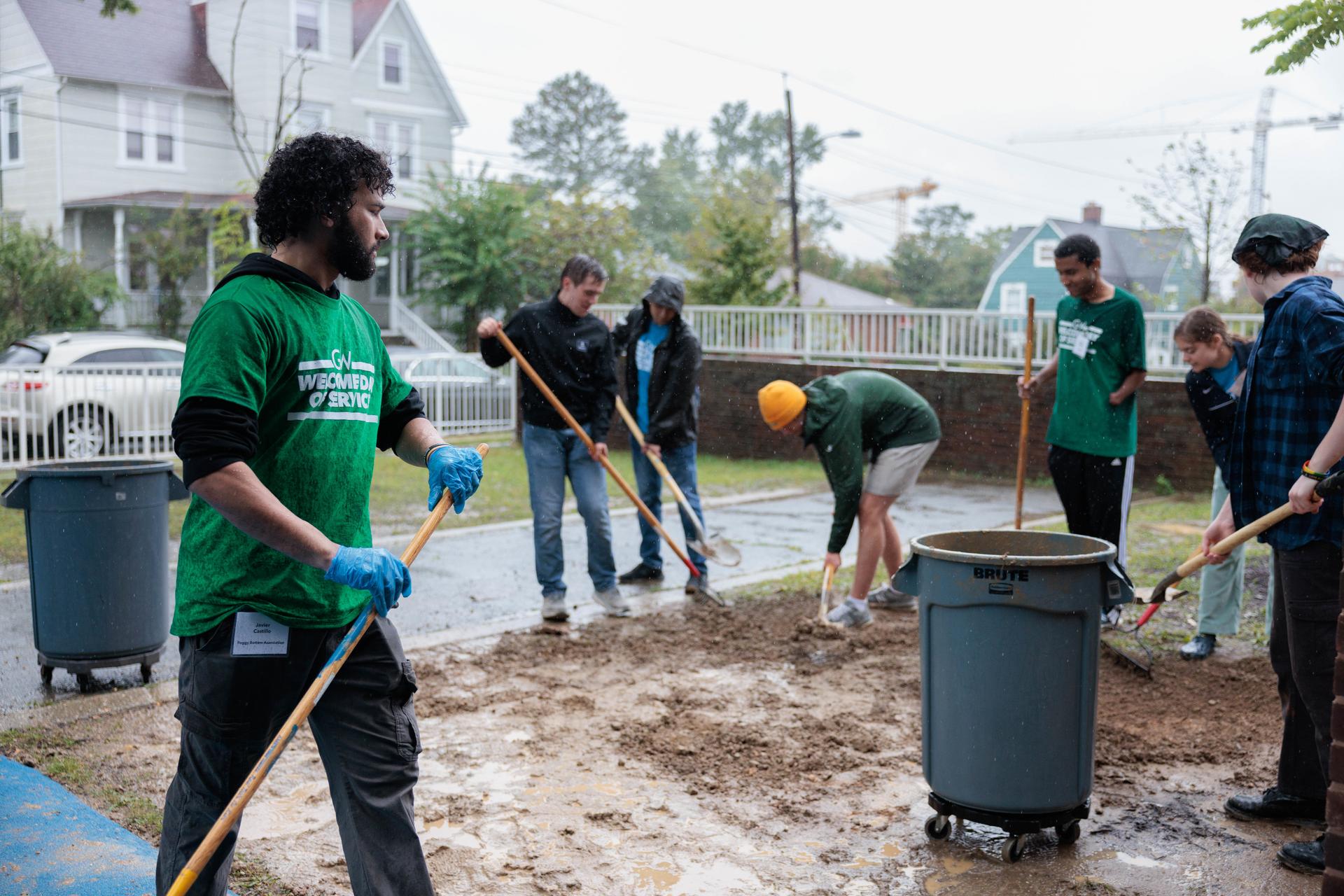
Of all his many accomplishments, he said, he is most proud of having been awarded the Presidential Lifetime Volunteer Service Award in 2022, after logging more than 4,000 hours of community service.
“I feel like that’s really at the heart of who I am. It’s giving back, it’s supporting the community, it’s advocating for a better life. I’m invigorated by performing a good piece of music or studying an interesting legal case, and I can just pour that energy right back.”