

Fifteen years before the opening of the Kennedy Center for the Performing Arts in 1971, the Washington National Opera made its home at the George Washington University’s Lisner Auditorium. Lisner was in its 10th year of existence when WNO was founded (as Opera Society of Washington) in 1956. With the world premiere of a new version of Scott Joplin’s “Treemonisha,” opening March 7, WNO is returning to its original venue.
“March is opera month at GW,” said Natalie Hisczak, scheduling director for GW Events & Venues. The updated version of Joplin’s opera portrays an African American educator’s experience following Reconstruction. Directed by Denyce Graves, it will be followed at Lisner by the Washington Concert Opera’s performance of Georges Bizet’s “The Pearl Fishers,” and then WNO returns with its production of “The Crucible,” Robert Ward’s opera based on the play by Arthur Miller.
Relations between WNO and GW were rekindled in November 2024 when a fire alarm in the Kennedy Center Opera House activated water sprinklers, necessitating an emergency change of venue for Verdi’s “Macbeth.” Luckily, Lisner was nearby and available. After a noontime phone call to GW, according to Paul Hegarty, associate vice president in the Division of Safety and Operations, WNO performed a concert version that night.
“This is an example of how we can be a great partner within the community,” Hegarty said. “We have a lot of academic obligations, student organization events and other things that happen here at Lisner, but we were able to fit WNO into our schedule.”
“They already knew the space,” Hisczak added, “so they knew that we would be a good partner for them.”
Francesca Zambello, artistic director of WNO, said in a statement that her company this season is presenting “American works that explore themes at the heart of what makes our country great. ‘Treemonisha’ celebrates the triumph of education over ignorance, while ‘The Crucible’ is a cautionary tale about a righteous mob that murders innocent women and tears families apart.” A WNO production of “West Side Story” will be staged later in Baltimore.
One of the first major performing arts centers in the D.C. area, Lisner Auditorium is celebrating its 80th anniversary this year. It has a larger capacity, at around 1,400 seats, than the Kennedy Center’s Eisenhower Theater, with approximately 1,160 seats. (The Kennedy Center’s Opera House is larger, with more than 2,300 seats.) Members of the GW community will receive a 20% discount on tickets. They can show their GW ID at the Lisner box office to avoid online fees, or buy tickets online with a code that will be published on the university calendar.
Hoping to create opportunities for GW students, Hegarty and Hisczak contacted Robert Baker, associate professor of music and director of Performance Studies in the Corcoran School of the Arts and Design, housed in the Columbian College of Arts and Sciences. He responded with enthusiasm.
“To me, it’s a huge deal that the opera is coming to Lisner,” Baker said. “This isn't just a retreat from the Kennedy Center. There are things that are good about the space of Lisner, about its history, and the intersection of our two communities—GW and Washington National Opera—that can create added value.”
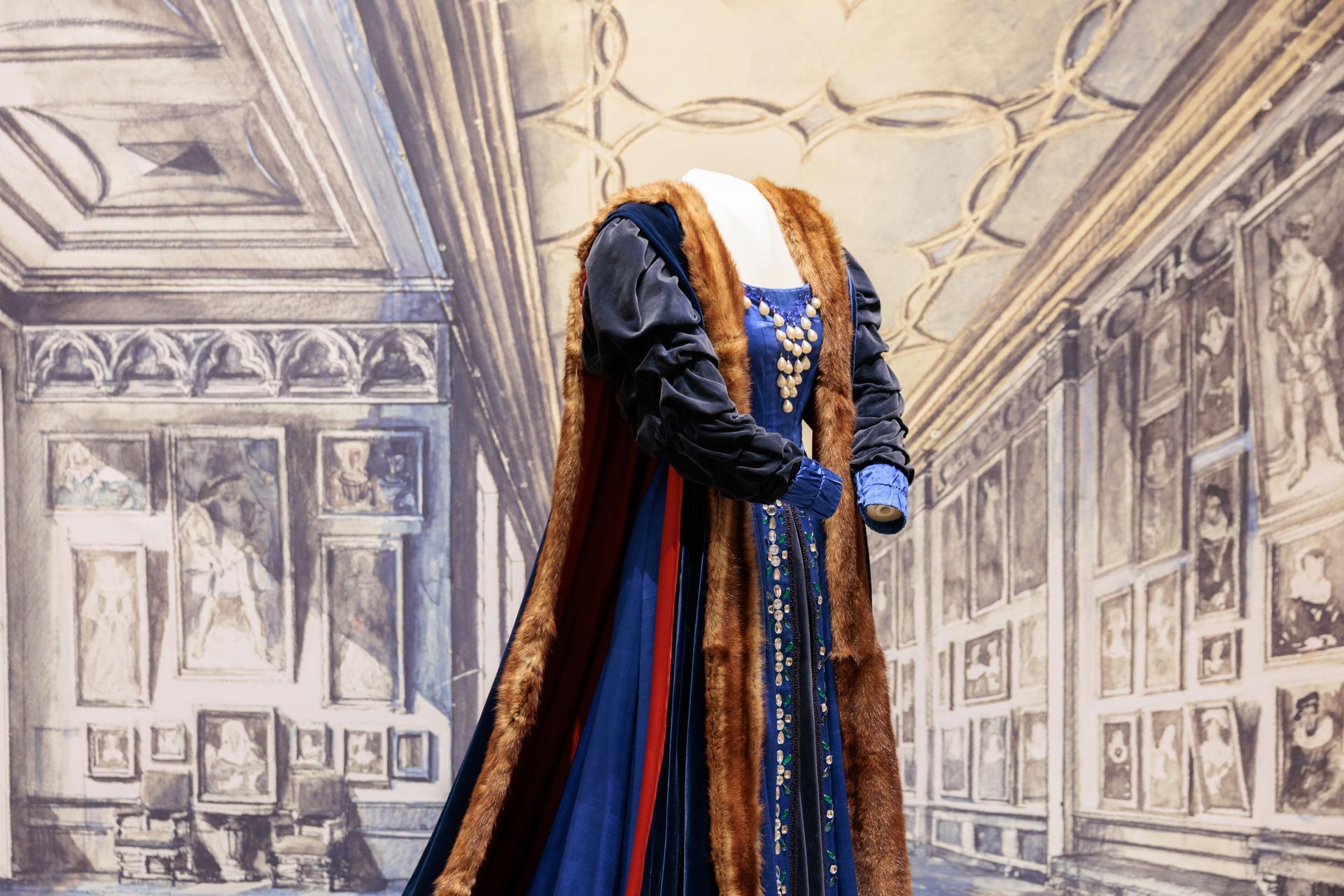
At 6:15 p.m. on Monday, March 2, in Phillips Hall, professionals from WNO will offer students an inside look at “Treemonisha” and talk about the challenges of reconstructing it for a contemporary audience. Joplin, known as the “King of Ragtime,” presented the work’s single performance in a read-through in 1915; no original production designs or orchestration survive.
“How do you design for a piece when there's a lot of missing information?” Baker said. “What were the design aesthetics of that moment? How much do you bring them forward? In new orchestration, how much do you bring forward Joplin’s ragtime score? Did he mean for this to be an orchestrated romantic opera with an orchestra? What’s the best way to tell this story to an audience in 2025?”
Students interested in these and other questions are welcome to attend the talk and should email Baker for details. WNO staff members may also discuss some of the challenges associated with moving out of the Kennedy Center and into Lisner.
Baker said GW orchestra students will be going to a tech rehearsal in Lisner on the evening of Wednesday, March 4.
“I sang with the Washington Opera for 30 years,” Baker said. “And over all those years, I've had a relationship with people in the education department and administration, where I've been taking students to see the operas. I think this is going to be an evolving relationship and I will do my best to get the best outcome for both WNO and for students. We’ll be building students’ awareness of how we tell stories on stage—and that includes lighting and movement.”
“We’re always trying to find ‘only at GW’ moments,” Hegarty said. “This is another great example of that. We want to be global conveners and actually bring the world here.”
Tickets for “Treemonisha” and “The Crucible” may be purchased at the Lisner Box Office or at this link. The box office is open Tuesdays from 11 a.m. to 3 p.m. Tickets for Washington Concert Opera productions may be purchased at this link.