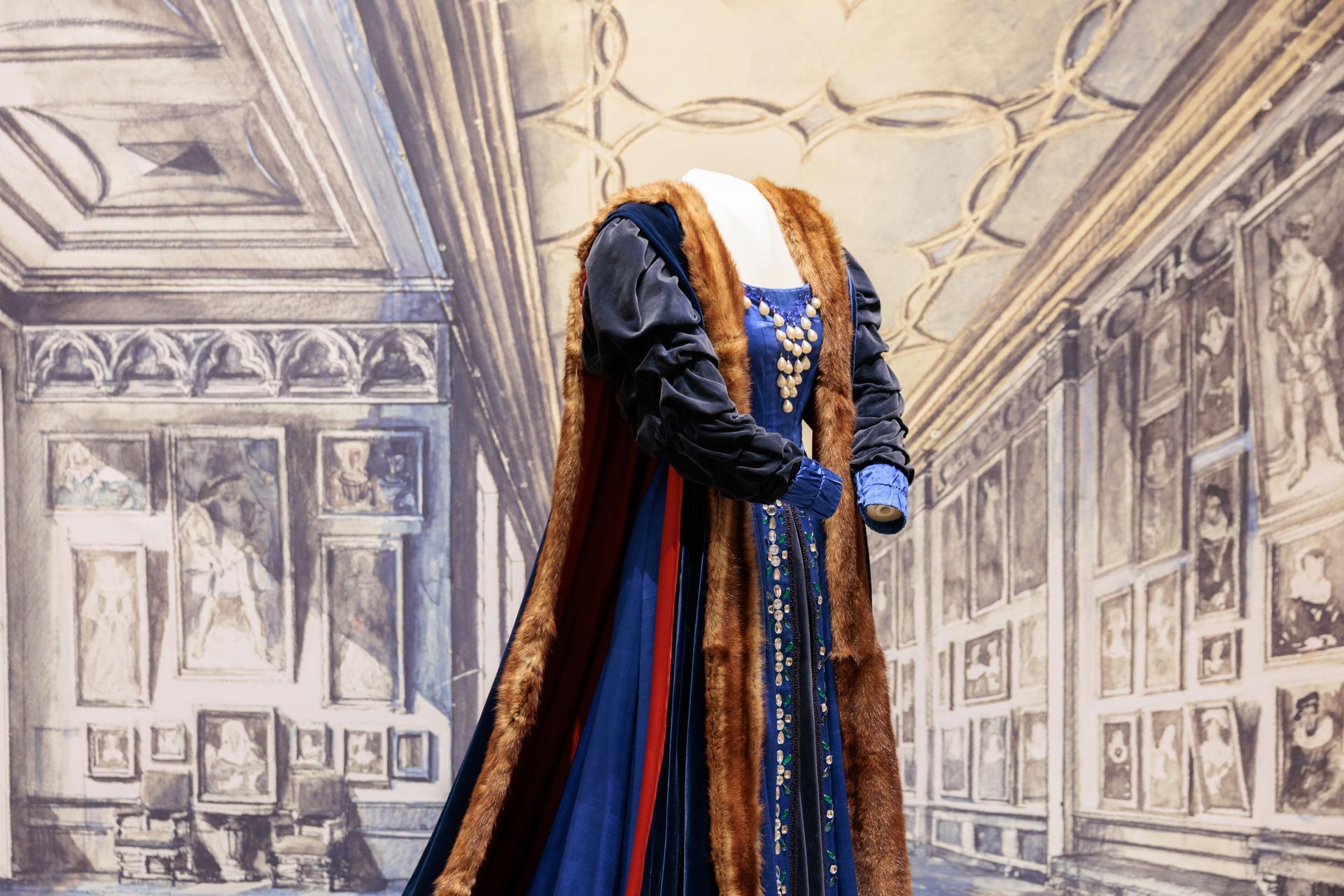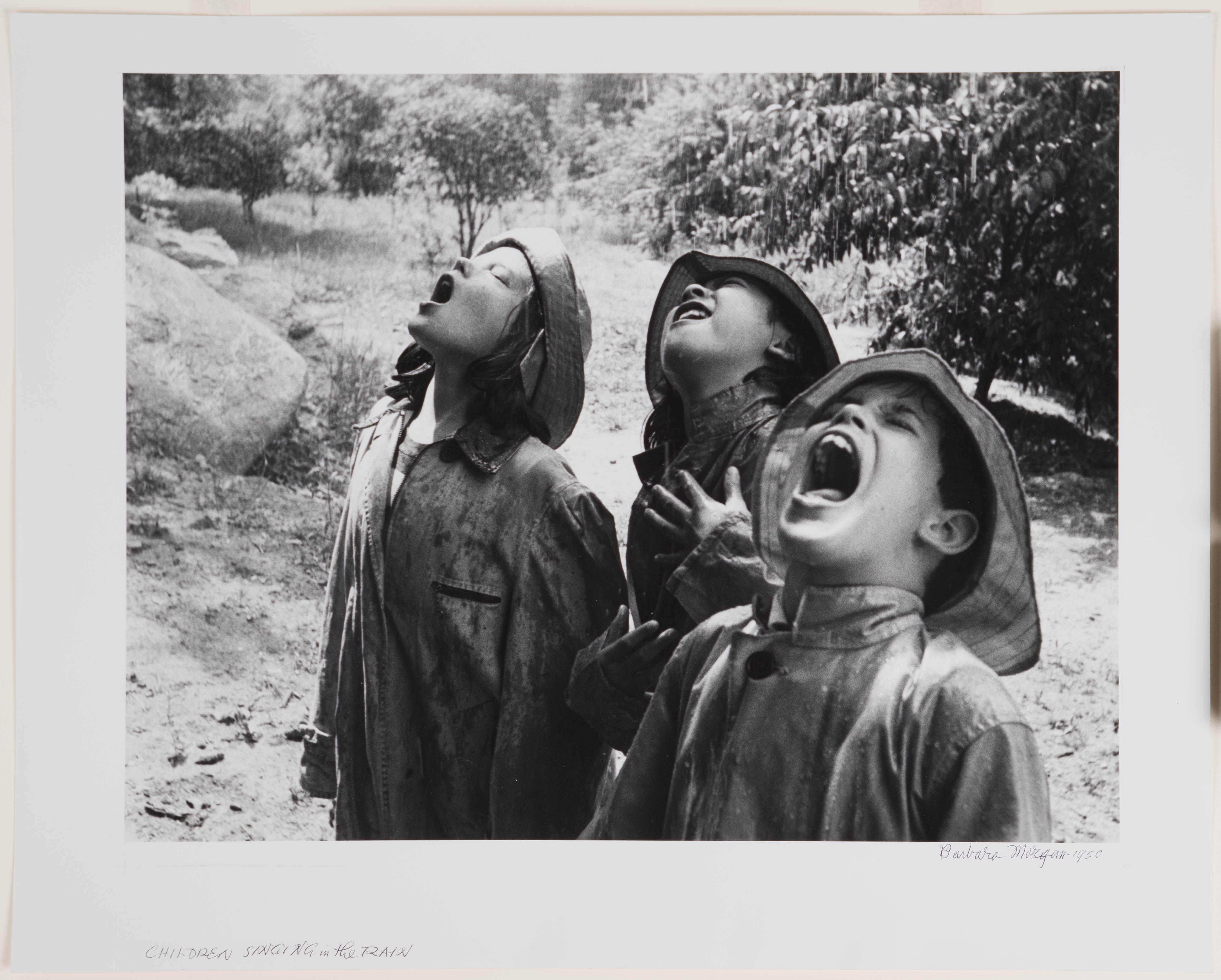


George Washington University students in the art history class The 1920s: Curating the Collection effectively got the benefit of two classes in one. In addition to learning about the history of the decade, they created an exhibit to display period objects selected from the GW art collection.
“On one level, it’s like a professional practices class, because they get to have this intellectually stimulating experience of creating an exhibition,” said Bibiana Obler, associate professor in the Corcoran School of the Arts and Design, who taught the course last spring. “On another level, they engage with the material of the 1920s, to understand history through art. That’s a way of learning about history that is different from what you get from reading textbooks and from the various other ways that we could engage with that history.”
The exhibit, “Cracks & Reforms: The 1920s Through the GW Collection,” is on view this semester in the Luther W. Brady Art Gallery in the Flagg Building at the Corcoran School, part of GW’s Columbian College of Arts and Sciences.
When Olivia Kohler-Maga, who oversees the Brady Art Gallery, heard of Obler’s interest in an exhibition of work from the 1920s, she searched the GW art collection for possibilities. The timing was perfect, not only because we’re in the midst of that Jazz Age decade’s 100th anniversary, but because of the similarities between now and then.
“I love the art from the early 20th century, and I find the time period fascinating,” Obler said. “A lot of what was happening in the early 20th century doesn’t seem so different from what we experience now.”
Visitors may share Obler’s feeling when they see Marc Chagall’s etching “The Man Without a Passport before the Captain of the Police” and find themselves thinking of ICE agents confronting people on American streets. Looking at a photograph from 1927 of a woman standing in front of a sign advertising women’s hosiery in Palestine, ideas about the unequal distribution of wealth, geopolitics or the representation of women may come to mind.
“Cracks & Reforms,” in one room of the Brady Art Gallery, is next door to another exhibit, “Unfossilizing African Art,” created over four semesters by 59 students of Assistant Professor Clement Akpang, which fills the gallery’s remaining two rooms. That exhibit brings together 37 objects alongside visual materials that add explanatory depth.
Graphic design students created the catalog for this exhibit, under the supervision of Assistant Professor Aasawari Kulkarni and Adjunct Professor Sharmila Karamchandani in their jointly taught Communication Design class. The collaboration created rich opportunities for interdisciplinary learning that Obler expects will continue in the future.
Each student in Obler’s class selected an object from the GW Art Collection and then wrote exhibition proposals explaining how they thought the group of objects worked together. The students were a mix of graduate and undergraduate students from art history and museum studies. They sorted the objects into groups elucidating four themes that came into sharper focus in the 1920s: the evolution of various artistic media from older to more contemporary styles; the modern woman; migration; and the “new vision” of photography under the influence of surrealism and other pressures of the age.
They also chose introductory and concluding objects to make overarching statements about the exhibit as a whole. The students wrote catalog entries and wall text describing the objects they had chosen.
“There's a lot of photography in the show,” Obler said, “but some of it looks very painterly and old-fashioned and some looks avant-garde.”


Three of the 19 students became curators of the show, working with an exhibition design team to figure out its physical layout and order. A timeline was created by Kaitlyn Segreti; Eve Rozier did primary research that helped the class think about the work and the period. Rozier found primary sources to quote that illuminate the time and the objects in the exhibit. The show’s title, “Cracks & Reforms,” comes from T.S. Eliot’s “The Waste Land,” a poem that became a literary landmark after it was published in 1922.
Several students who took the course said they gained an understanding of the 1920s as a time of upheaval and uncertainty after the earthquake of the First World War.
“Everyone was pretty shook up across all spheres,” Segreti said. “There were a lot of changes in the way that people had their economy structured, but also in the way that people thought after going through a war of that massive scale. The destruction reshaped the way people saw humanity and life in general.”
“I was intrigued by the juxtapositions and contradictions of the 1920s, this existence of both the old and the new,” Rozier said. “We still had old nations and this idea of traditionalism, but we also have the new woman and many new nations being formed after the First World War. It was a time they were really grappling with what it means to be a part of a nation and what it means to be a part of a society and a part of the globe in general.”
Dzhuletta Avanesian, B.A. ’14, is currently pursuing a master’s degree in art history. She worked on the exhibition design team to devise an order for the objects. The object she selected was a photograph by Boris Ignatovich of the Soviet composer Dmitri Shostakovich.
“This exhibition is like a documentary about the 1920s, about the conditions in which people lived and the consequences of World War I,” Avanesian said. “People wanted to find something new.”
“Cracks & Reforms” and “Unfossilizing African Art” are on view through Dec. 12. The Brady Art Gallery is open to the public from 1–5 p.m. Wednesday–Saturday. Students will provide public tours every Friday and Saturday at 1 p.m. and will make brief presentations about their research in a public symposium on Nov. 19. For more information, click here.