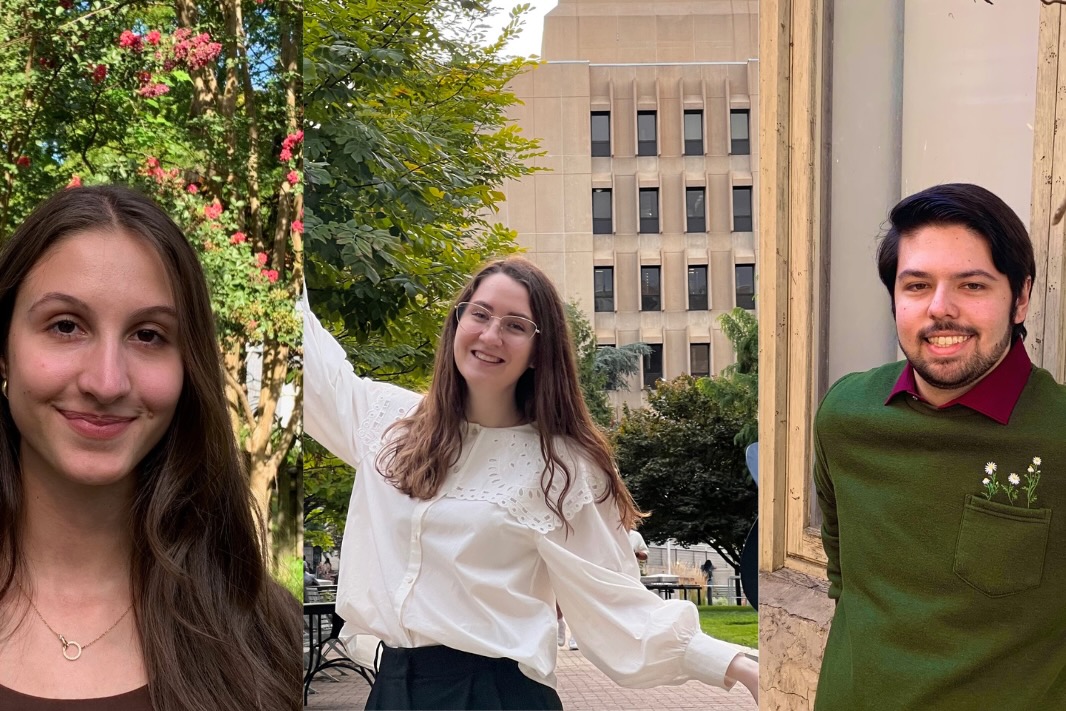


The Presidential Fellowship for Leadership gives graduate students at the George Washington University a unique opportunity to develop professional skills and to network with previous fellows as well as faculty, staff and other students—all while enjoying two years of financial support for their academic pursuits.
Fellows make life better for other graduate students and the GW community at large. At the end of the last academic year, the current fellows submitted a grant proposal to the Luther Rice Foundation and were awarded $11,500 to strengthen ties among graduate students and to foster interdisciplinary research by creating a database where graduate students can connect through their research interests.
Currently in his second year as a fellow, Jack Hatcher, B.S. ’24, is pursuing a master’s degree in civil and environmental engineering. The proposed database, he said, could connect students with other researchers they might otherwise never have known about. By creating opportunities for growth and connection, the database could lead to the discovery of new interests or the opening of new fields of professional opportunity.
“In the School of Engineering, I did research in water and water resources,” Hatcher said, “and there are people over in the Elliott School working on water policy. I didn't know those people existed!”
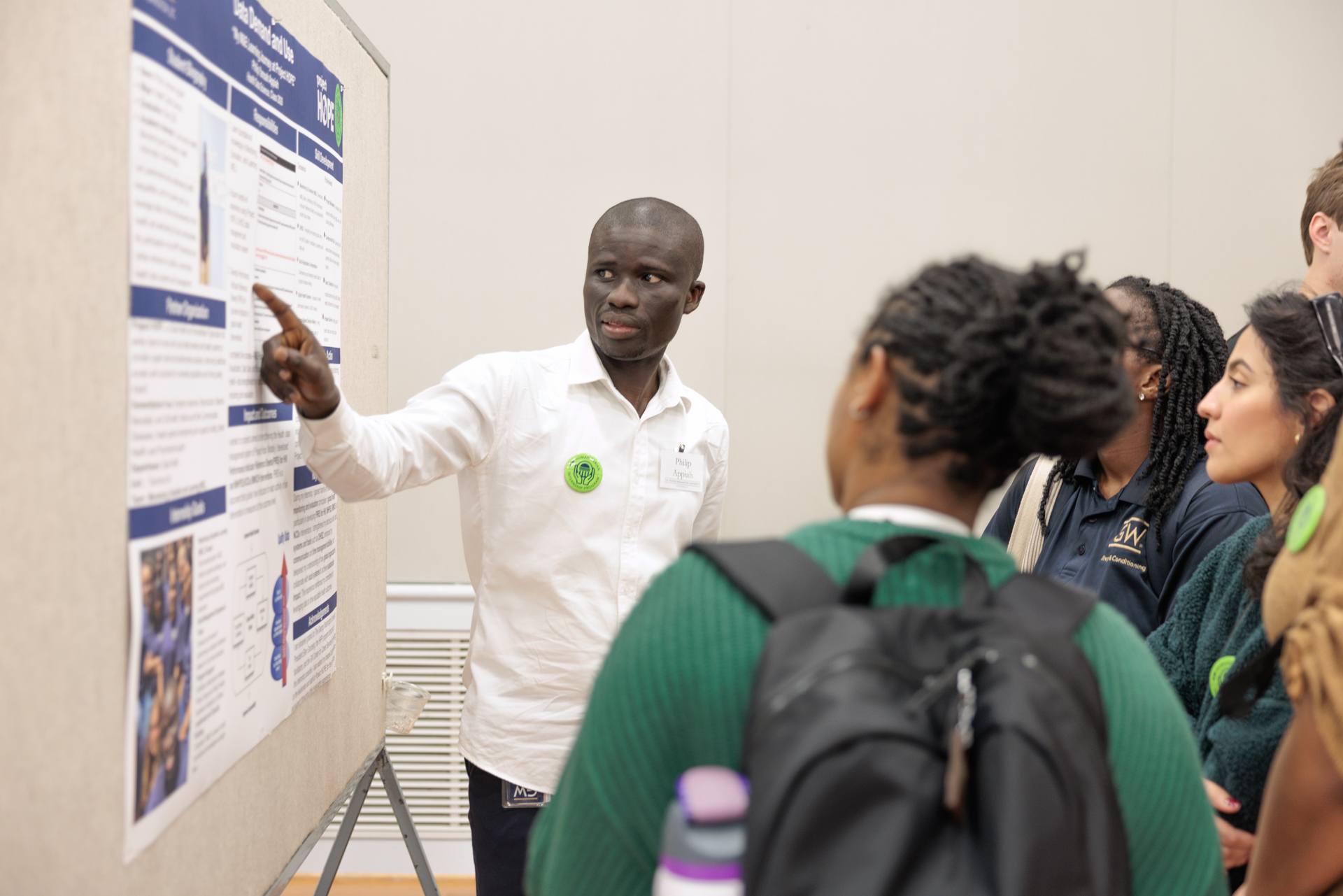
Fellows are given jobs at GW that align with their interests and help them learn about university administration and other subjects. Hatcher has been working in the office of the president, nurturing his interest in project management. He managed the Humanitarian Intern Program, matching GW students with humanitarian organizations for paid internships.
Building community ties among graduate students requires scheduling events where they can come together and relax. This focus of the award from the Luther Rice Foundation has been especially meaningful for Markella Lanara, B.A. ’24, currently working toward a master’s degree in mental health counseling.
“It’s such a unique experience as a grad student to be able to be plugged in for those community events,” Lanara said, “and also to create more spaces for grad students to come together and make friends. A big complaint that grad students have is that there are not a lot of events and spaces for them to socialize and feel connected with the university. Helping them achieve that has been the highlight of the fellowship.”
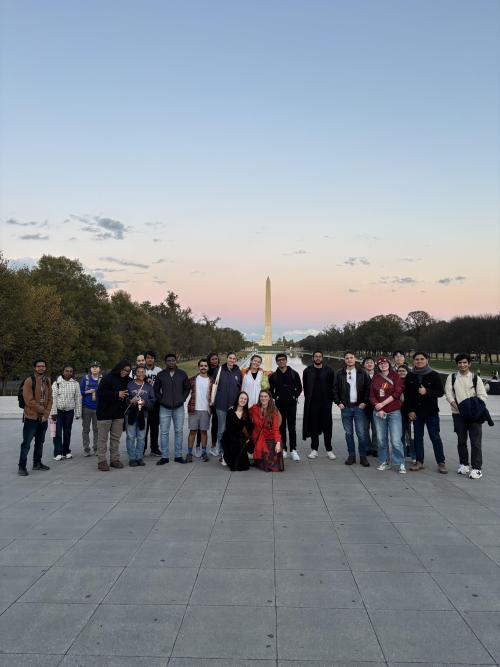
Among the successful events held so far this year, a virtual game night and a “spooky monument walk” were particular successes. A “Friendsgiving” celebration will be held soon. A newsletter was recently developed to highlight the fellowship and the activities of its past and current fellows. Alumni of the program, which was started in 1989 by Stephen Joel Trachtenberg, president emeritus, offer monthly professional development seminars to the GW graduate student community.
The Presidential Fellowship for Leadership program is now administered through the office of Suresh Subramaniam, vice provost for graduate and postdoctoral affairs. Autumn Anthony, assistant director in the Office of Graduate and Postdoctoral Affairs, directs the program. She is proud of the fellows for making a difference in the quality of life at GW, and for the way they aligned the goals outlined in their successful application for a grant from the Luther Rice Foundation to the university’s strategic framework.
“We’re envisioning the research database as almost like a social network platform for researchers. Interdisciplinarity is something that the university is very interested in, so partnering with other students to write a paper or come up with a proposal for funding is something that we want to make it easier for them to be able to do,” Anthony said.
Fellow Nina Balandina, M.A. ’24, is working on a Ph.D. in comparative and international education. Last year, she was given a position in the Office for Graduate and Postdoctoral Affairs, working on parental leave for graduate and postdocs. This year, she is helping international students in the International Services Office, answering questions about visa issues and helping to organize events, among other tasks. The two focuses outlined in the grant from the Luther Rice Foundation are joined in her mind.
“They complement each other, because the main idea is to help graduate students at GW create a stronger community from a research point of view and also to help them socialize,” Balandina said.
First-year fellow Grace Allread, B.A. '25, has also been active in the program, balancing her duties as a graduate teaching assistant with planning events and brainstorming ways to enhance the graduate student experience at GW.
The number of fellows varies from year to year depending on funding and other variables. Applications are now open for next year’s cohort, with a deadline for submissions of Jan. 15. Hatcher, Balandina and Lanara all said they encourage interested undergraduate students to apply.
“I’ve learned a lot about myself working in a professional setting,” Hatcher said. “I’ve also learned a lot about how leaders make decisions, so that has helped with my own leadership ability. I’ve really gotten an insight into how higher education works as a whole.”
Applicants should think about how they would change GW if they could, Balandina said, because the fellowship gives them a powerful engine to make an impact.
Lanara stressed the connections made through the program: “You build so many great connections, and you’re more prepared for leaving grad school and entering the workforce.”