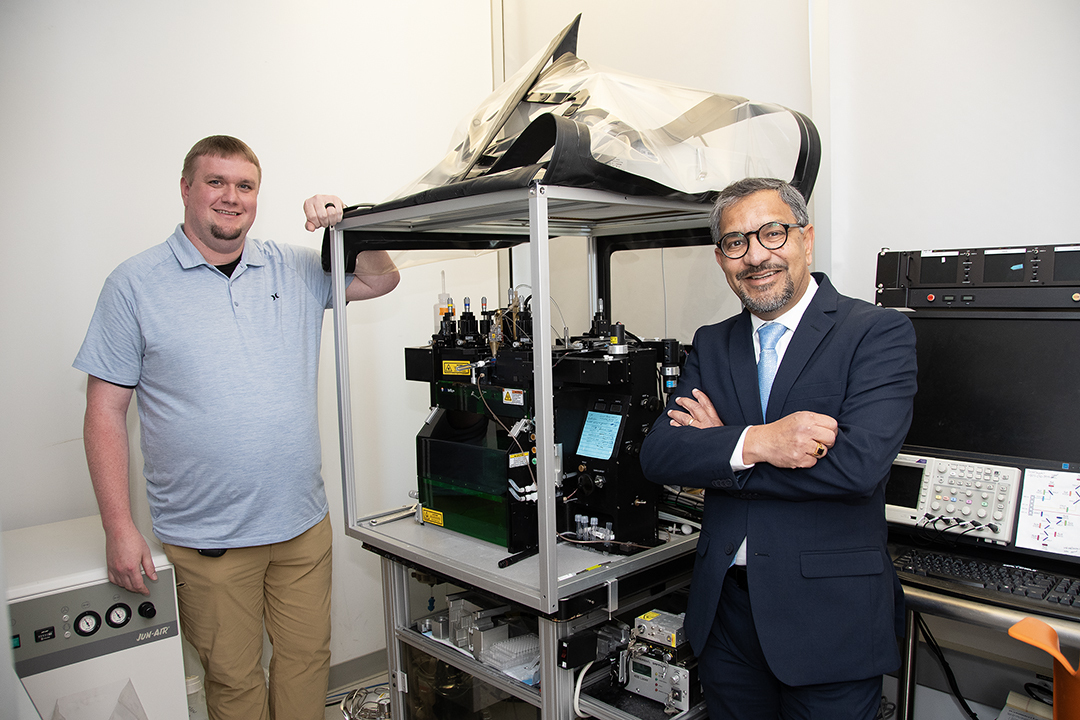

The George Washington University Office of Innovation and Entrepreneurship (OIE) held a final showcase of the Dual-Use Regional I-Corps Cohort, displaying the entrepreneurial efforts of teams from the Mid-Atlantic region, on Thursday, Nov. 20 at the Jack Morton Auditorium.
This showcase followed weeks of research teams working with GW instructors and mentors who teach the lean startup methodology to test the viability of technological and innovative ideas with customer discovery through conversation.
Interim Provost John Lach acknowledged the contributions of Virginia Tech, Old Dominion University, University of Virginia, North Carolina State University and the Virginia Innovation Partnership Organization who collaborated with GW in advancing innovation and entrepreneurship.
“As a national leader in dual-use innovation, GW has a unique responsibility to ensure that discoveries made in our labs translate into real-world impact, including in domains critical to national security,” he said. “The Dual Use I-Corps program embodies that mission. It equips researchers and entrepreneurs with the skills to understand defense needs, engage directly with end users, and explore pathways for their technology to serve commercial and government markets.”
Lach recognized the cohort participants’ demanding efforts in “bringing technology out of the lab and into the world” that is “transformative and impactful.”
OIE Executive Director Bob Smith said GW instructors and mentors worked with these teams to help them articulate their business thesis (a concise description of the business model) and how to determine the potential of their ideas by talking to prospective users and customers. “They’ve been doing a great job,” Smith said.
The teams were celebrated by GW and federal government officials who shared their knowledge of the complex rules of both the federal government and the private commercial marketplace.
Keynote speaker James Williams, M.B.A. ’86, the former U.S. General Services Administration’s Acting Administrator under President George W. Bush, who spent 40 years in federal government acquisition and now advises private sector clients, suggested, partly in jest, learning the government’s alphabet soup.
In the meantime, Williams offered helpful tips for doing business with the government. “The buying organization of the federal government is like any other buying organization. People tend to buy from people they know and trust,” Williams said.
“Consider seeking out consultants and advisers who can help shepherd you through the process because it is complicated and, by association, they can bring some level of trust to you.”
He also advised teams to “find out the names of the engineers, the users, the acquisition people, advisers within the government. Find out as much as you can to support the mission. Talk to them from their mission standpoint, not about your solution. Expect to take anywhere from 12 to 18 months just to get into the federal marketplace. ‘Sometimes you have to wait until another budget cycle,’” he said.
In summary, he said, “Selling to the government can be tough, but the rewards are fantastic.”
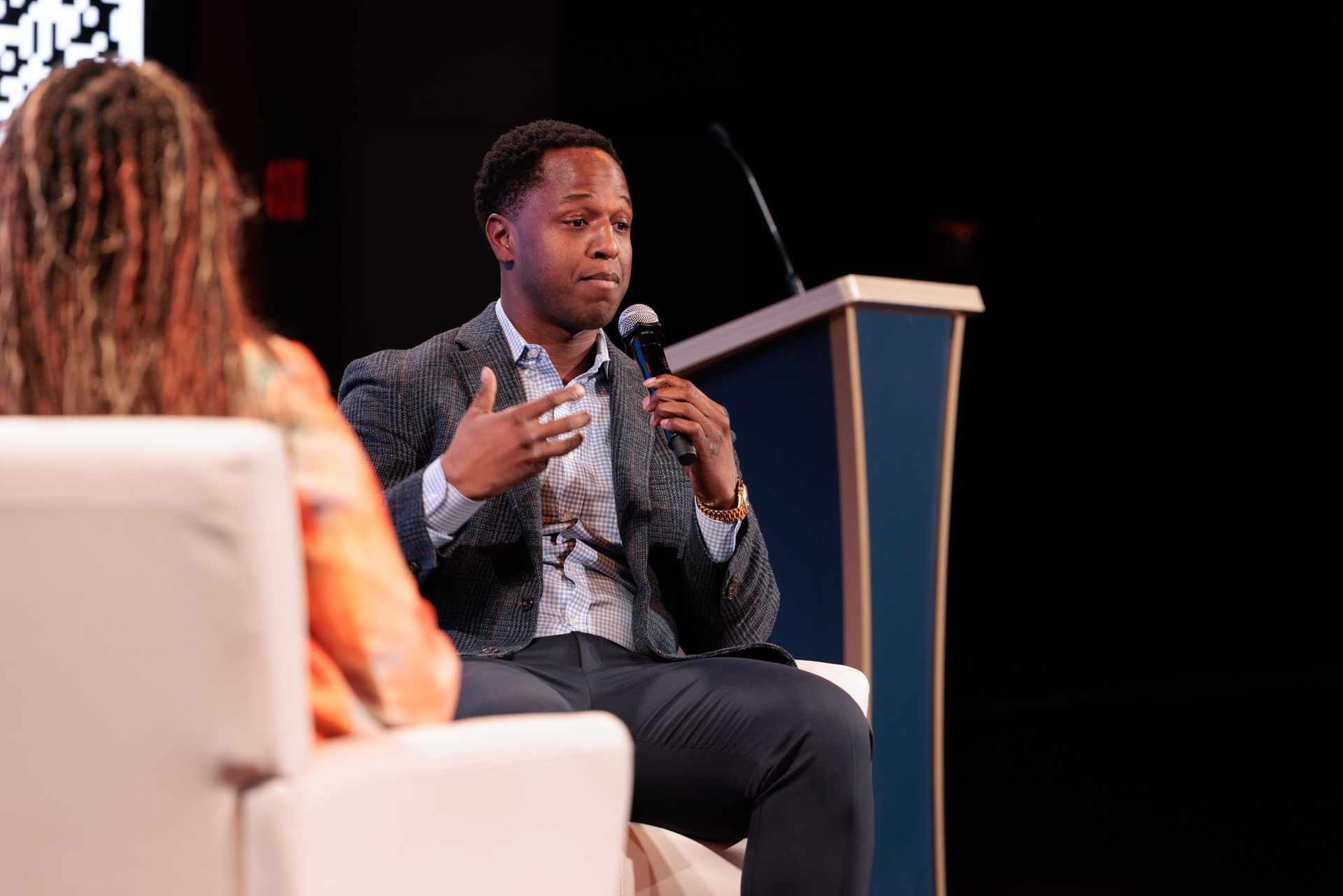
In the fireside chat that followed, Benjamin Harvey, assistant research professor in GW Engineering and founder of AI Squared, shared with Talmesha Richards, NSF I-Corps instructor, the mindset it takes to balance working with the federal government and building a successful startup—a combination of faith, risk taking and hard work.
“A lot of individuals will say, I think that company actually got lucky,” Harvey said. “But they don’t see the hours late at night that you have to spend just trying to figure out how can I continue going when ultimately I’ve got a family to take care of.”
When asked where the biggest opportunities are, he said, building a good strong collaborative research relationship with a principal investigator in the federal government can give you a shot at a contract that leads to employment in one of the many agencies that need people with their skills.
Being employed by the National Security Agency served him well, he said, when he decided to pursue startup relations in the Silicon Valley ecosystem. “An ability to go into the market with relationships [in the federal government] is something that a lot of startups can’t do right now that you guys will have the unique ability to achieve.”
Three teams from the I-Corps cohort described the projects they had engaged in over the past several weeks that involved testing their hypotheses with both federal and commercial customers.
CRATTA A.I. team leader Joe Harvey, an associate of Benjamin Harvey, described how his team discussed the need for their product with numerous cyber risk decision-makers and heard a need for a service that provides “measurable, repeatable indication of metrics, and dramatically shifts governance from reactive to proactive” in detecting cyber risks.
The Thermoelectric Heat Exchange, a business led by GW doctoral student Sumner Grubisch, targeted natural gas plant directors responsible for carbon capturing during power generation to investigate the need for a technology that improves system efficiency during the recapturing process.
WOLFSKY, a team led by Sean Kearney, is conducting research on a radar signal that would allow grid security operators for electrical infrastructure to quickly identify and respond to aerial threats to avoid outages and damages to systems.
Also on hand to offer tips on working with defense program officers was Capt. Robin Russell (ret.), a professor of acquisition management at the Warfare Acquisitions University and OIE mentor, who briefed attendees on changes to the acquisition process in the $874 billion Defense Department budget.
One attendee called it, “one of the most insightful events I’ve attended all year.”