

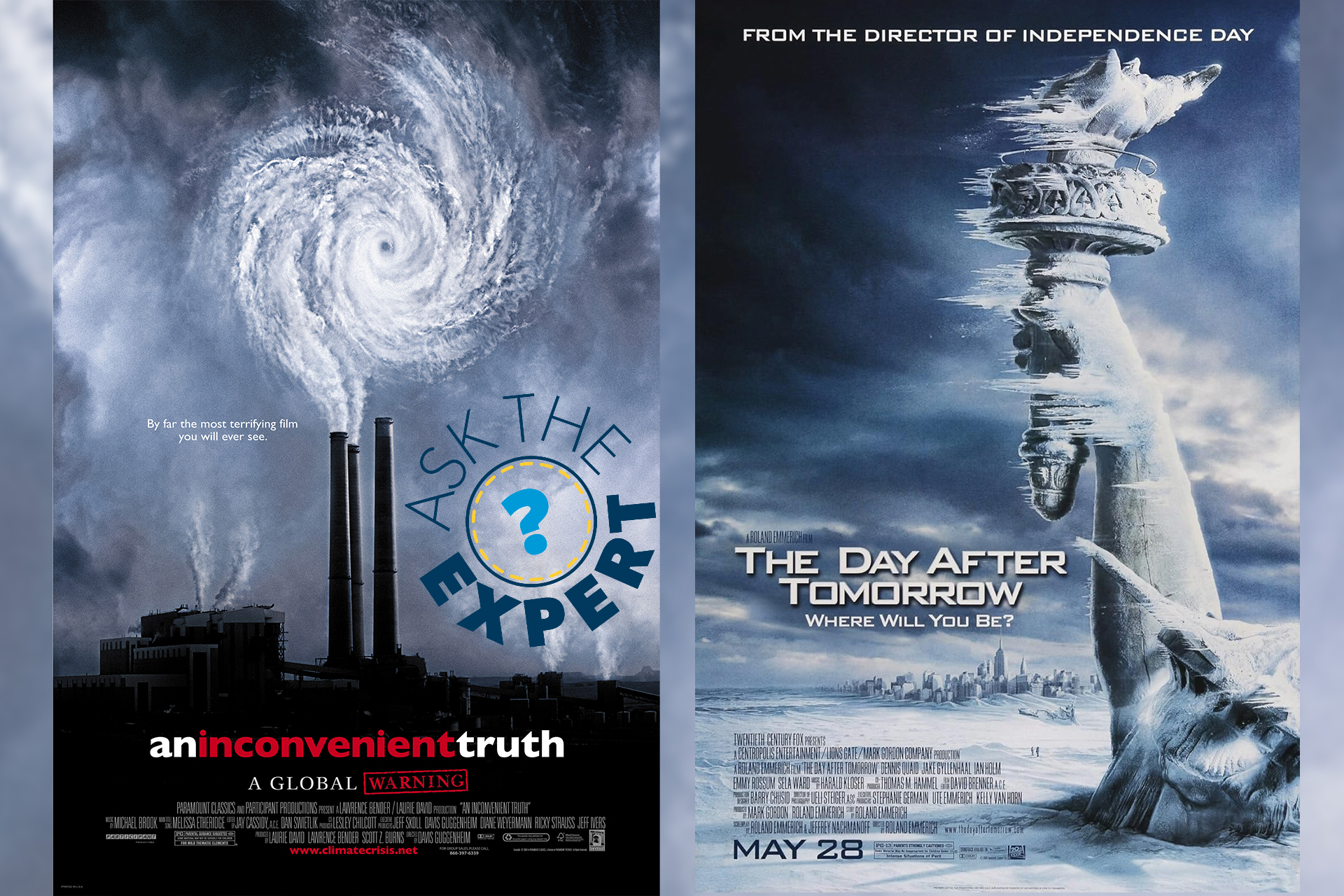
This year will mark the 20th anniversary of “An Inconvenient Truth,” a milestone in climate change communication. It gave audiences a better understanding of the range of climate change’s impacts. The world seemed ready to embrace action on climate change, but I think the film also generated some backlash that we still wrestle with today.
Key films like “The Day After Tomorrow” and “An Inconvenient Truth”—one fictional, one documentary—set up the climate conversation in ways that were positive and negative. Different genres of storytelling can shape the message of climate change in ways that enhance or detract from what you're trying to get across.
The documentary “Merchants of Doubt” shows that there has been a concerted, well-funded, ongoing campaign by the fossil fuel industries and their allies to discredit climate change. They have even insinuated certain ideas into our public discussion that take them off the hook, like the notion of a carbon footprint, which makes the solution to climate change a matter of individual actions when it needs to be collective. People are still wrestling with how much of a societal transformation is necessary, and how to achieve it.

That is also one of the issues wrestled with in cli-fi, or climate fiction. Some writers try to imagine changes to the economic system, to the marketplace, to finance, as a first step in coming to grips with climate change. Kim Stanley Robinson’s novel “New York 2140” imagines the city functioning after the sea level rises 40 feet. Manhattan becomes a kind of Venice, with the lower floors flooded, but people still living and working on the upper floors. They build glass bridges between the buildings and gondolas go up and down the flooded streets. Robinson incorporates the idea of a small tax on stock transactions that build up a fund for dealing with climate disasters.
There’s no film that’s as good at experimenting with these social dimensions as a novel. “The Day After Tomorrow” imagines the world tipping into an ice age because of climate change, which is not a high-probability outcome. But the climate freeze is one of the more popular misconceptions of climate change as a result. For example, the very good action-thriller “Snowpiercer” depicts humans battling to survive in an Earth frozen as a result of geoengineering gone wrong.
The recent series called “Extrapolations” offers a more realistic warning against geoengineering. It starts in the near future and goes to 2067, exploring how climate change intersects with agriculture, artificial intelligence, geoengineering and the lingering effects of colonialism.
Bill McKibben, probably the most famous American climate activist, issued a call in 2004 for art about climate change. But artists, like everyone else, often get stuck in their own way of doing things. When a filmmaker takes on climate change, it often becomes another way to tell a story of the end of the world, or present a dystopia. We need to get beyond these genres and tell stories that we haven't told before.
That’s a big ask. Hollywood and television and the internet have an insatiable appetite for stories, so the temptation will be to keep telling the same stories with different characters.